Description
BEST Beam Stabilization System for Photon Beam Stability
The BEST Beam Stabilization System is a powerful instrumentation platform developed to stabilize photon beam position and intensity in synchrotron radiation beamlines. Beam stability is critical for many advanced experiments where even small fluctuations in position or intensity can affect measurement accuracy. This system provides a comprehensive solution that allows researchers to continuously monitor and correct beam behavior in real time.
By simultaneously controlling horizontal and vertical beam position along with beam intensity, the BEST system ensures consistent experimental conditions. This capability allows scientists to improve measurement reliability and achieve better repeatability in high precision research environments.
Distributed Architecture
A major advantage of the BEST Beam Stabilization System is its distributed architecture. The system is designed so that its electronic modules can be installed close to the devices they control or monitor. For example, readout electronics can be positioned near photon beam position monitors while actuator drivers can be placed near piezo positioning systems.
This architecture reduces cable length and minimizes noise interference while improving signal quality and response time. As a result, the system achieves higher performance and better overall stability for beamline control.
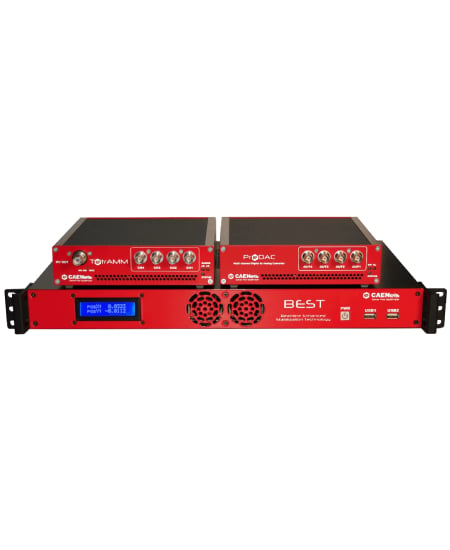
The system is composed of three main functional building blocks that work together to stabilize the beam. These include the readout block, the control and interface unit, and the actuator block.
High Speed FPGA Control
The BEST Beam Stabilization System uses FPGA based hardware to perform high speed control algorithms. These algorithms process detector signals and apply beam correction actions with extremely low latency. This fast processing capability allows the system to maintain beam stability even when disturbances occur at frequencies reaching several kilohertz.
By performing critical processing tasks directly on dedicated hardware, the system achieves reliable and deterministic correction performance. Non critical tasks such as configuration commands are handled separately by a Linux based central unit. This separation ensures efficient operation and stable system performance during experiments.
Readout and Control Integration
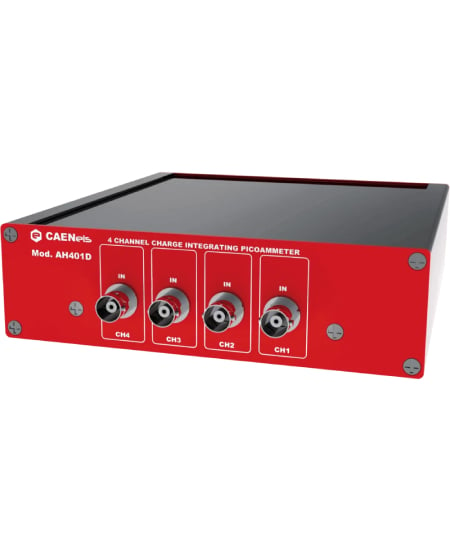
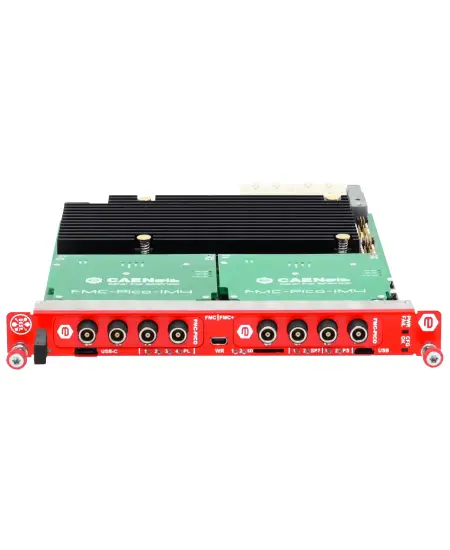
The readout component of the BEST Beam Stabilization System is based on a high precision multi channel picoammeter designed to measure detector signals from photon beam position monitors. This readout unit connects directly to detectors such as diamond detectors, ion chambers, or quadrant photodiodes used in beam monitoring systems.
The readout module communicates with the control unit through a high speed interface that supports efficient data transfer with minimal latency. The control and interface unit acts as the central processing hub for the entire system. Housed in a compact rack mounted enclosure, it allows researchers to configure beamline parameters, adjust detector geometry, and monitor beam behavior through a dedicated control application.
The system also integrates seamlessly with modern beamline infrastructure through Ethernet connectivity. In addition, compatibility with EPICS control systems allows the BEST system to be easily incorporated into existing synchrotron facility control environments.
With its integrated instrumentation, advanced control algorithms, and flexible architecture, the BEST Beam Stabilization System provides a reliable platform for maintaining beam stability and improving the performance of synchrotron radiation experiments.
Technical Specifications
| Parameter | Specification |
| System Type | Beam Position and Intensity Stabilization System |
| Application | Synchrotron radiation X ray beamlines |
| Control Capability | Beam position X and Y and intensity I0 |
| System Architecture | Distributed modular architecture |
| Core Processing | FPGA based hardware control |
| Correction Frequency Range | Up to several kHz |
| Readout Unit | Multi channel picoammeter readout module |
| Detector Compatibility | Diamond detectors, ion chambers, quadrant photodiodes |
| Communication Interface | Gigabit Ethernet |
| High Speed Link | SFP low latency interface |
| Control Unit | Rack mounted control and interface system |
| Software Environment | Dedicated beamline control software |
| Control System Integration | EPICS IOC compatibility |
| Operating Platform | Linux based central control unit |
Click here to learn more about similar products from CAEN ELS